How the arbitrage engine works
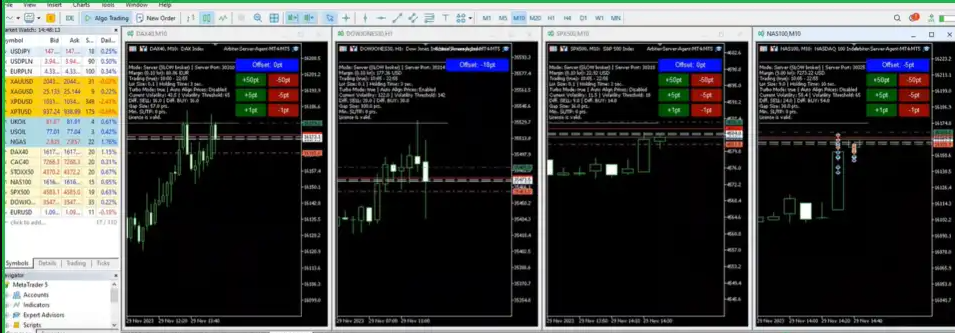
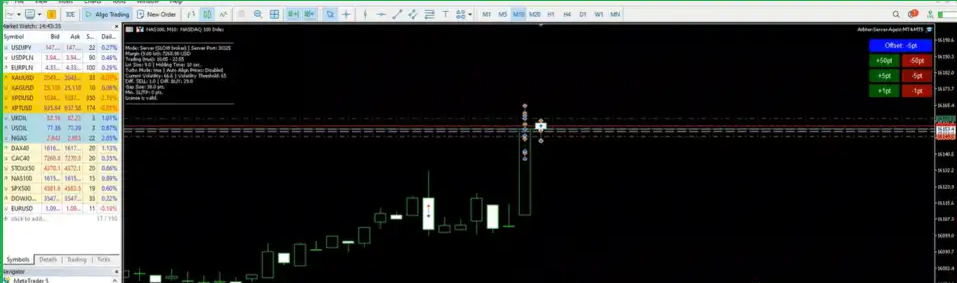
Arbiter Server Agent EA is a MetaTrader 5 expert advisor built around latency arbitrage. The system monitors price feeds from multiple brokers and identifies temporary dislocations where the same instrument trades at different levels. When the gap exceeds a configured threshold, the EA sends an order to capture the difference. Positions are held for only a few seconds, so exposure to sustained market movement stays low.
The EA runs on any chart timeframe because the arbitrage logic does not depend on candle patterns. It supports Forex pairs and crypto instruments, with a minimum account size of $100. Leverage settings are flexible, and the software does not impose a specific margin requirement.
Execution, filters and position management
A server-agent communication layer keeps the client terminal synchronised with a dedicated analysis server. This allows the EA to compare quotes from different feeds without manual monitoring. A turbo execution mode routes orders through the fastest available path when the connection quality allows it. The vendor describes order processing as millisecond-oriented, although actual latency depends on broker infrastructure and VPS location.
Volatility filters suppress trading during unstable price conditions. If the market moves too quickly or spreads widen unexpectedly, the EA pauses new entries. A session control setting restricts activity to predefined market hours, which helps avoid low-liquidity periods. The interface includes a real-time statistics panel showing active trades, filtered opportunities and recent execution metrics.
What the package includes
The download contains the compiled expert file Arbiter Server Agent MT5.ex5. Source code is not provided, and the EA is protected by a DLL licence. Installation requires allowing DLL imports in the terminal settings and placing the file in the appropriate Experts folder. No separate set files are mentioned in the product description, so parameter tuning must be done directly in the EA inputs.
Limitations and unsuitable use cases
This is not a trend-following or position-trading system. It does not aim to capture large directional moves, and it will not hold trades overnight. Traders who prefer manual analysis or long-term strategies should look elsewhere. Because the model depends on price differences between brokers, results vary by account type, execution model and network latency. Brokers with similar pricing feeds or slow order processing may reduce the number of viable opportunities.
The EA requires stable connectivity between the terminal, the analysis server and the broker. Interruptions to any link can prevent entries or delay exits. Anyone testing the product should first run it on a demo account to verify that the latency profile of their setup matches the arbitrage threshold. There is no guarantee that a given broker pair will produce enough discrepancies to generate activity.